We re-read these official pages on a rolling basis. When one changes, the new figure is checked by a person before it appears here.
What a year costs
EU/EEA students and Karta Polaka holders study free on full-time Polish-language programmes at public universities. That is the key distinction: "free in Poland" applies to Polish-language study, not to the English-taught programmes most internationals want.
Non-EU students at public universities, official figures: about €2,000 a year for bachelor's, master's and long-cycle degrees, and about €3,000 for postgraduate and doctoral. Real English-taught programmes at strong public universities commonly run higher, roughly €1,500-5,000 for a bachelor's and €2,000-6,000 for a master's, with examples from €500-1,000 at Adam Mickiewicz Poznań up to €4,000-8,000+ at Warsaw University of Technology.
Private universities: €2,000-6,000 a year.
English-taught medicine is the expensive outlier, five to eight times a normal degree:
- Range across Polish medical universities: roughly €9,400 to €17,000 a year
- Cheapest end: Medical University of Gdańsk around €9,400
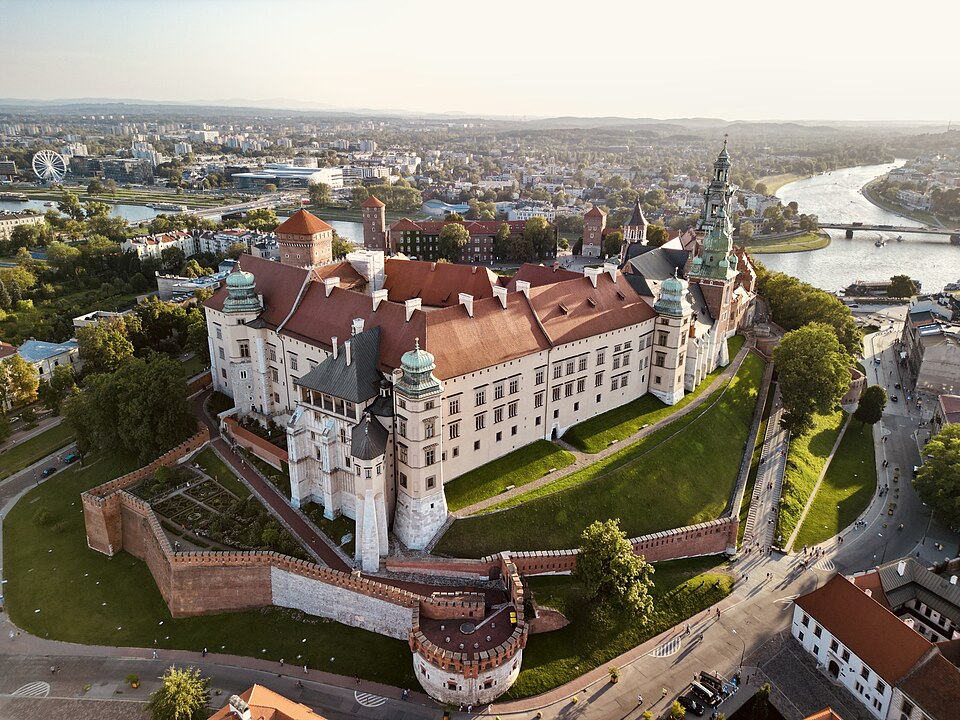
- Most expensive: Jagiellonian University in Kraków, €16,000 a year for the 6-year MD, €17,000 for the 5-year DDS (2026/27 admission, up about 3% on the previous year, then fixed for your cohort)
- Total tuition for a 6-year English MD: roughly €56,000 to €96,000, before living costs
Medicine is a 6-year long-cycle degree and dentistry 5 years: there is no cheap bachelor-then-master route in.
Living costs: €450-1,000 a month, among the lowest in the EU. A student dormitory is €100-300 (but places are limited and English-programme students are not always prioritised); a room in a shared flat €200-500; a whole apartment €400-1,000. Warsaw, Kraków and Gdańsk are the most expensive; Lublin, Białystok, Łódź, Kielce and Olsztyn sit comfortably at the cheaper end, which is why several of the cheaper medical schools are there.
The visa, and a trap in the paperwork
Non-EU students staying over three months need a national D visa with annotation "09", obtained at the consulate before travel, then converted to a temporary residence permit for studies after arrival.
- D visa: €80. Officially issued within 30 days, but the consulate checklist warns it may extend to 60, and applying within 60 days of travel is at your own risk. Appointments go through e-KONSULAT.
- Travel medical insurance is mandatory, minimum €30,000 cover, Schengen-wide, for the whole stay.
- Residence permit, PLN 340 stamp duty plus PLN 100 for the card. Should conclude within 60 days of a complete application, though Warsaw and Kraków run long backlogs.
- Your first permit as a first-year student is 15 months, not 12.
Now the trap, and it is worth reading twice. The funds requirement is calculated over that 15-month period, not a year:
- PLN 1,010 a month if you live alone (PLN 823 per person with family)
- plus 15 × your monthly rent and utilities
- plus return travel: PLN 200 to a neighbouring country, PLN 500 elsewhere in the EU, PLN 2,500 outside the EU, waived if you hold a return ticket
- plus tuition
So the living-cost element alone is 15 × PLN 1,010 = PLN 15,150, and a realistic total for a student renting at PLN 1,000 a month is around PLN 32,000-35,000 (roughly €7,500-8,100) plus tuition.
Meanwhile, some consulate checklists still quote PLN 701 a month. Two different legal standards are genuinely in play: the entry regulation the consulate applies, and the Foreigners Act the voivode applies, but the consulate figure also appears simply out of date. Budget to PLN 1,010 over 15 months, because even if the consulate accepts less for the visa, the voivode will apply the higher figure a few months later when you convert to a residence permit. Students who budget to the consulate figure get the visa and then fail the permit.
Working while you study
This is genuinely Poland's best feature and a real selling point. Students holding a student D visa or a temporary residence permit for studies have unrestricted access to the labour market and need no work permit. There is no 20-hour weekly cap of the kind Germany, the Netherlands or the UK impose.
One caveat that matters: the exemption is tied to full-time study. Students on part-time or extramural (niestacjonarne) programmes must obtain a separate work permit. If a private university enrols you part-time, your work rights change: check the mode of study on your enrolment document, not the marketing.
After you graduate
A dedicated residence permit for graduates seeking work or starting a business: 9 months, once only, non-renewable. Open to graduates of full-time studies, and it must be your first residence application after completing studies.
Nine months is notably shorter than Germany's 18 or the Netherlands' 12, and recruitment material rarely mentions it. Within those nine months you need to find work and switch to a single permit for residence and work, typically granted up to three years.
Language
Poland has a large and mature English-taught portfolio: several hundred full degree programmes, concentrated in medicine and dentistry, business, computer science and engineering.
Typical requirement is B2 English, with most universities accepting IELTS 6.0-6.5; medical faculties sit at the upper end and many also require a subject entrance exam in biology and chemistry. Many universities waive the certificate if your prior education was in English or you pass their own interview: convenient, but at weaker institutions also a route to admitting students whose English is not adequate.
Is Polish needed? Not for the degree, but yes in three places that matter. Daily life outside the big-city student bubble runs in Polish, especially with landlords, banks and the voivodeship office. Clinical rotations in medicine involve Polish-speaking patients, and English-stream medical students are expected to acquire functional medical Polish: universities build it into the curriculum for exactly that reason. And the postgraduate internship and licensing exam are primarily in Polish.
When to apply
There is no central application system, you apply directly to each institution. That decentralisation is itself a risk factor, because it leaves room for commercial agents to position themselves as the "official" channel.
Main intake is October, with a smaller February/March intake at some universities. Medicine is October-only at essentially all Polish medical universities, fills earliest, and several medical schools admit on a rolling basis until places are gone: applying in January is materially better than applying in June.
Build in two to three months after your offer for the visa. Prior certificates generally need legalisation or apostille, and some qualifications require nostrification: start that early, as it is a common cause of missed deadlines.
What to watch out for
Whether a Polish English-taught medical degree actually lets you practise: the question that matters most.
Within the EU/EEA the answer is strong, Polish medical qualifications get automatic recognition under the EU professional qualifications directive, which is the genuine basis of Poland's appeal to Norwegian, Swedish and German students.
Elsewhere it is conditional, and the conditionality hinges on one thing recruiters gloss over. To hold a full licence to practise in Poland you must complete a 13-month postgraduate internship (staż podyplomowy) and pass the Polish State Medical Final Examination. The standard internship is a one-year Polish-language programme; an English-language six-month alternative exists at some universities but requires a separate Ministry of Health decision recognising it as equivalent.
Most international graduates leave Poland with a diploma but without a Polish licence. That gap bites hardest for Indian students: India's National Medical Commission requires foreign medical graduates to have completed the course and internship in the same country and to be eligible to practise there, on top of passing the screening exam. A graduate who never did the staż can fail that test. For the UK there is a route that does not require PLAB, but it still requires documented evidence of internship or foundation-equivalent experience, which points back to the staż again.
Verify recognition with the regulator in the country where you intend to practise, in writing, before you pay a deposit. Never on the word of an agent or a brochure claiming the degree is "recognised worldwide."
The quality spread, and the agent economy around it. Poland's public medical universities and leading public universities, Jagiellonian, Warsaw, Poznań and Wrocław, are long-established and research-active. At the other end sit private institutions and a dense layer of commission-paid recruiters marketing "MBBS in Poland" to South Asian families with pricing, guarantees and "EU degree" claims that the public universities themselves do not make. Agent quotes frequently omit the application fee, the first-instalment deadline (Jagiellonian requires the first instalment within seven days of registration), annual increases and living costs. Apply directly and verify every fee on the institution's own site.
Regulatory tightening is underway. Since late 2023 the government has introduced stricter Polish-language requirements, stronger verification of qualifications, and a cap limiting foreign students to 50% of enrolment at any single university: aimed squarely at small private institutions that had become majority-international. If you enrol at an institution near that threshold, its intake and possibly its viability are exposed.
Visa appointments and permit backlogs. e-KONSULAT publishes no availability guarantee, and slots at high-demand posts such as India, Nigeria, Turkey and Central Asia are a well-known bottleneck; students routinely lose an intake because no slot appeared. Start the day you receive your offer, and file the residence permit application well before your visa expires, because filing on time keeps your stay legal while the case sits in the queue.
Where these numbers come from
| Figure | Source | Checked |
|---|
| PLN 1,010 / 823 a month, 15-month permit | Lubuskie Voivodeship Office, updated 3 July 2026 | 24 Sep 2026 |
| €80 D visa, PLN 340 + 100 permit | EU Immigration Portal, Poland, 16 Sep 2025 | 24 Sep 2026 |
| Unrestricted work, no permit for full-time students | EU Immigration Portal, Poland | 24 Sep 2026 |
| 9-month graduate permit | Małopolska migrant information service, March 2025 | 24 Sep 2026 |
| Public university fees €2,000 / €3,000 | NAWA study.gov.pl | 24 Sep 2026 |
| Jagiellonian MD €16,000 / DDS €17,000 | Jagiellonian University Medical College, 2026/27 | 24 Sep 2026 |
| 13-month internship and licensing exam | Medical University of Łódź | 24 Sep 2026 |
| 108,600 foreign students | Statistics Poland (GUS), 16 June 2025 | 24 Sep 2026 |
Rules change, sometimes at short notice. Every figure above carries the date we checked it. Check the official source before you rely on it, and if you are coming for medicine, check the practice question with your own country's regulator first.
Immigration and fee rules change, sometimes at short
notice and sometimes without announcement. Every figure above carries the date we checked it
and a link to the official source. Check that source before you rely on it.

 United States
 Canada
 Australia
 Netherlands
 Ireland
 Japan
 Cyprus
 Studying in Poland