



 United States
 Canada
 Australia
 Netherlands
 Ireland
 Japan
 Cyprus
Money you must show
No fixed amount published
The Study in Egypt portal and the university pages we checked do not state a minimum balance for student residence.
Study in Egypt, Ministry of Higher Education, source re-checked 29 September 2026
Countries
Where do you want to study?
Costs, visas and work rights for each country, from official sources.
All countriesPopular destinations
Fields of study
Courses
Search courses and degree programmesFrom official government registers, datedUniversities
Universities, colleges and schools
Every kind of place, at home or abroad, with the official register where there is one.
Browse every placeKinds of place
Scholarships
Help paying for it
Government schemes and scholarships, matched to where you are from.
Find my scholarshipsCosts
What will it cost?
Budget, costs, work rights and deadlines, in your own currency.
All planning toolsGuides
Straight answers
Recognition, entry, language, housing, scams and careers, from official sources.
All guides Studying in Egypt
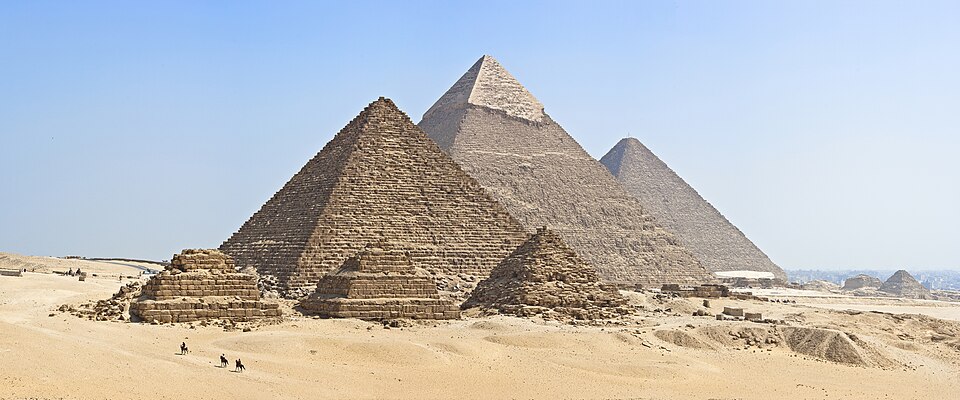
What it takes to study in Egypt: the money you must show, the visa, work rights and the stay after graduating, from official sources. 122 universities, colleges and schools listed, in Africa.
No single national register of the institutions licensed to enrol international students is published here, so there is nothing for us to check against and no page below carries a register line. That says nothing about the schools themselves. Look for Egypt’s own accreditation or quality-assurance body, and ask any institution directly which one recognises it.
From the official sources in the guide below, checked 24 September 2026. See it in your currency
The practical part
Checked against official sources on 24 September 2026. Every figure below says where it came from.
Money you must show
The Study in Egypt portal and the university pages we checked do not state a minimum balance for student residence.
Study in Egypt, Ministry of Higher Education, source re-checked 29 September 2026
Visa fee
Late application fine EGP 1,685. Entry itself is usually on a tourist visa: the e-Visa portal lists USD 30 single entry, USD 65 multiple entry.
American University in Cairo, Visa Matters (updated 10 Aug 2026), source re-checked 28 September 2026
Stay after you graduate
Residence is tied to enrolment. Staying to work needs an employer and a separate work permit.
American University in Cairo, Visa Matters, source re-checked 28 September 2026
We re-read these official pages on a rolling basis. When one changes, the new figure is checked by a person before it appears here.
Public universities. International applicants to public universities apply through the government's Study in Egypt portal, run by the Ministry of Higher Education. Cairo University's Faculty of Medicine, for example, sends international applicants straight to it. Fees for international students are set in US dollars per programme and shown in the portal. The portal loads only in a browser with JavaScript, and we could not read its fee tables when checking, so we do not quote public-university fees here. Read them in the portal for your exact programme before applying, and save a copy.
Private universities publish their own schedules. Future University in Egypt lists 2026/2027 annual fees for non-Egyptian students:
The American University in Cairo charges international students USD 735 per credit hour, payable in dollars. A 15-credit semester is therefore USD 11,025, or about USD 22,050 for a 30-credit year.
Living costs. AUC's published cost-of-attendance budget for 2025-2026 is the only official breakdown we found:
That is roughly USD 10,000 a year before tuition. AUC's campus is in New Cairo; costs elsewhere differ, and AUC's budget is written for its own students. Rents in Cairo are quoted in Egyptian pounds and have risen quickly with inflation, so check current listings.
Egypt works in two stages: enter, then get student residence inside the country.
Entry. AUC's guidance is that North American, Canadian, Australian and EU citizens can get a visa on arrival, valid for one month; some nationalities must apply for a 90-day visa before travelling; and others should obtain a visa from the Egyptian consulate at home, stating study as the purpose. The official e-Visa portal lists USD 30 for a single-entry tourist e-visa and USD 65 for multiple entry. It lists tourism visas only; it does not say the e-visa covers study. AUC's page still quotes USD 25 for a visa on arrival, so check the current fee with your airline or consulate.
Student residence. Once enrolled, you apply for a residence permit through the passports and immigration authority, normally with your university's international office handling the file. AUC lists the current fees (page updated 10 August 2026):
AUC notes that "governmental approvals are valid for four years" but residency cards are renewed annually. Certain nationalities must also register their passport within seven days of arrival, for which AUC charges an EGP 110 registration fee.
The money. Neither the Study in Egypt portal (as far as we could read it) nor the university pages we checked set a minimum bank balance for student residence. Your university may ask for proof that fees are paid. Keep proof of funds and tuition receipts with you for every renewal.
We found no official source that grants international students a right to work in Egypt, and no published hours limit. A student residence permit is for study. Paid work normally needs a work permit sponsored by an employer, which is a separate process.
Plan to fund the whole degree without a job. If your university offers on-campus assistantships, ask the international office in writing whether they are compatible with your residence status.
There is no post-study work visa. Your residence depends on being enrolled, and when your studies end it ends too. To stay and work, you need an employer to obtain a work permit and work residence for you. Plan your departure date or your next permit before your residence card expires, because the late fine (EGP 1,685 at AUC's current figures) applies to late applications.
Arabic is the main language of teaching at public universities. Some public faculties also run English-taught programmes or sections; the Study in Egypt portal shows the language and fee for each programme. Private universities such as AUC and Future University teach in English.
Check the language of your exact programme, not the faculty. Clinical training in hospitals involves patients who speak Egyptian Arabic, so even on an English-taught medical degree you will need working Arabic for your clinical years. Everyday life, residence renewals and hospital placements all run in Arabic.
The Egyptian academic year starts in September or October.
Medicine: check recognition at home before you enrol. Egypt is a major destination for medicine, and the degree is only useful if your own regulator will license you.
Residence is yearly. Your card must be renewed every year, and late applications are fined. Put the expiry date in your calendar and start renewal early.
Currency risk. Private universities and AUC charge in US dollars, while rent and daily costs are in Egyptian pounds. Movements in the pound change your real costs, and fees can be revised each year: check the schedule for your intake.
Use the official portal. For public universities, apply through Study in Egypt yourself. Agents who promise places outside the portal cannot give you a legitimate admission.
| Figure | Source | Checked |
|---|---|---|
| Public university applications via Study in Egypt | Study in Egypt portal and Cairo University Faculty of Medicine | 24 Sep 2026 |
| Residence EGP 7,100, re-entry EGP 850, fine EGP 1,685, 7-day registration | AUC Visa Matters, updated 10 Aug 2026 | 24 Sep 2026 |
| e-Visa USD 30 / USD 65 | Egypt e-Visa portal | 24 Sep 2026 |
| Future University 2026/2027 fees | Future University in Egypt | 24 Sep 2026 |
| AUC USD 735 per credit hour | AUC tuition | 24 Sep 2026 |
| AUC living cost budget 2025-2026 | AUC cost of attendance | 24 Sep 2026 |
| NAQAAE WFME recognition to April 2029 | World Federation for Medical Education | 24 Sep 2026 |
| ECFMG accreditation policy | Intealth | 24 Sep 2026 |
| GMC qualification check | General Medical Council | 24 Sep 2026 |
| India foreign medical graduate rules | National Medical Commission regulations | 24 Sep 2026 |
Rules change, sometimes at short notice. Every figure above carries the date we checked it. Check the official source before you rely on it. Public-university fees for international students, any proof-of-funds threshold and student work rules were not published in a form we could verify.
Immigration and fee rules change, sometimes at short notice and sometimes without announcement. Every figure above carries the date we checked it and a link to the official source. Check that source before you rely on it.
What is there
Not every country is mostly universities. The shape of this list tells you what studying here actually looks like.
Money
Where to start
122 in total. Open any one for its profile.
By subject
Nearby
Worth comparing before you settle: tuition, visa rules and work rights differ sharply between neighbours.
Not sure it should be Egypt? Four questions rank every country for you. Something wrong on this page? Tell us and we will fix it.